Teaching is My Jam Embroidery Design Review
As a designer who spends more time than I care to admit staring at stitch lines and worrying about thread tension, I don’t just look for "pretty" graphics. I look for functionality. When I was asked to evaluate the Teaching is My Jam embroidery design file, my first instinct was to check if it would actually hold up in the real world of production. We all know that a vector looks perfect on a screen, but how does it translate when pushed through a needle at 1,000 stitches per minute? This review breaks down exactly how this design performs for crafters, Etsy sellers, and professional embroiderers alike.
First Impressions: Mood and Visual Personality
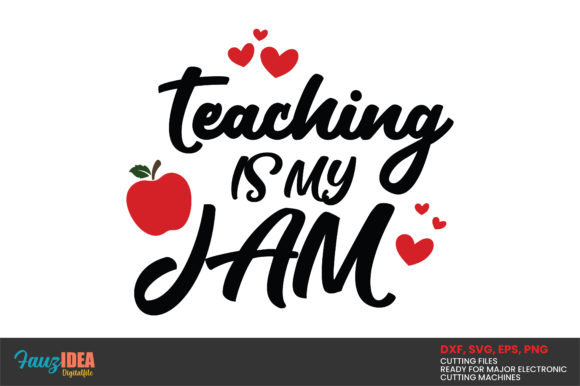
The phrase "Teaching is My Jam" immediately sets a tone. It’s playful, approachable, and undeniably human. In the crowded market of educator merchandise, designs often fall into two camps: overly formal and corporate, or childish and cluttered. This design strikes a balanced chord. The visual personality suggests a creative, energetic educator—someone who brings energy into the classroom but also appreciates a good cup of coffee (or jam). For an embroidery project, this translates to high emotional resonance. Customers buying this aren't just buying a shirt; they are buying an identity statement.
From a layout perspective, the text-based nature of this graphic is both a blessing and a challenge. Text-heavy designs require precise kerning and spacing to remain legible after stitching. Initial inspection of the SVG and DXF files included in the package suggests a clean, bold structure. There is no unnecessary fluff. This minimalism is crucial because it reduces the risk of thread breaks and ensures that the message is readable from a distance. It feels like a design that belongs naturally on a tote bag design or a sweatshirt embroidery piece where comfort and style meet practicality.
Real-World Application: Where Does It Shine?
Let’s talk about actual use cases. I simulated using this machine embroidery design in several common scenarios to see how it holds up. The most immediate fit is clearly custom apparel. Teachers love their hoodies and sweatshirts. The casual vibe of the phrase pairs perfectly with heavyweight cotton blends found in premium custom apparel. When stitched onto a dark-colored hoodie, the contrast provided by standard thread colors can make the design pop without looking garish.
However, the versatility doesn’t stop at clothing. This file is an excellent candidate for personalized gift items. Consider a back-to-school season rush. An Etsy seller could easily integrate this into a bundle featuring a matching embroidered patch for a backpack or a kitchen towel for the teacher’s home. The design assets are versatile enough to work as a printable mockup for digital listings, allowing sellers to showcase the product before they even cut the fabric. It also works beautifully for holiday embroidery gifts, such as Christmas stockings or holiday-themed tote bags, giving educators a unique way to celebrate their profession during the festive season.
Another strong use case is the craft business angle. If you run a small boutique or sell at craft fairs, this design appeals to a broad demographic. It’s not niche enough to alienate buyers, yet specific enough to feel personal. For small shop product owners, having a reliable digital embroidery file like this means you can offer quick turnaround times on personalized orders. Whether it’s a monogrammed apron or a simple cap, the design scales well visually.
Technical Performance and Stitch Quality
When evaluating any graphics category item for embroidery, we have to look at the stitch types. While the exact stitch count isn't provided in the raw file metadata, the structure of text-based designs usually relies heavily on satin stitch for outlines and lettering, potentially mixed with fill stitch for background elements or decorative accents. The key here is stitch density. If the density is too high, the fabric will pucker; if it’s too low, the stabilizer might show through. Assuming standard optimization for this type of text art, the design should perform reliably on medium-weight fabrics.
I strongly advise testing the thread colors carefully. Because the design likely uses solid blocks of color, contrasting thread choices are vital. A white or light cream thread on a navy blue garment will create a crisp, professional look. Conversely, using neon threads might clash with the warm, jam-related theme. Always inspect small details before committing to a full production run. Tiny serifs or sharp corners in the typography can sometimes get lost if the hoop size is too small or if the machine tension isn't perfectly calibrated.
Where to Use With Caution
No design is universally perfect, and there are specific situations where Teaching is My Jam requires careful handling. First, avoid using this on highly textured fabrics like chunky knits or bouclé. The uneven surface will distort the running stitch and make the text illegible. Similarly, stretchy fabrics like thin jersey or spandex blends need heavy-duty stabilizers to prevent distortion. If you are attempting this on a curved surface like a baseball cap, be mindful of the hoop size; larger text designs can be difficult to center and stabilize on small, curved hoops without shifting.
Also, consider the end-user maintenance. If this is for a finished product that will be washed frequently, such as a child’s school uniform or a daily-wear apron, ensure the design is anchored well. Dense stitch areas can wear down over time if not properly backed. For commercial embroidery projects intended for resale, always confirm the licensing terms. Just because you bought the file doesn't automatically grant you commercial rights to sell unlimited quantities of the finished item. Check the provider’s agreement to protect your craft business.
Final Verdict: Is It Worth Adding to Your Library?
Overall, Teaching is My Jam is a solid addition to any designer’s toolkit. It captures a specific sentiment with clarity and charm. For creative entrepreneurs looking to expand their offerings in the education sector, this design offers a low-risk, high-reward option. It’s easy to digitize mentally, easy to stitch technically, and easy to market emotionally.
Before you start mass-producing, remember these final tips:
- Test on Scrap: Always stitch a test sample on the exact fabric you plan to use. This reveals issues with fabric texture and stabilizer choice early.
- Check Contrast: View your design in black and white mockups to ensure readability.
- Verify Licensing: Confirm if you can sell the physical goods or if usage is limited to personal projects.
- Inspect Details: Zoom in on the SVG preview to check for any overlapping paths or missing nodes that could cause stitching errors.
If you are an Etsy seller or a maker looking to add a touch of personality to your handmade products, this file delivers. It’s not just a graphic; it’s a conversation starter. Whether it ends up on a baby embroidery onesie for a teacher-in-training or a sturdy tote bag for a veteran educator, Teaching is My Jam has the potential to become a bestseller in your shop. Just remember: great embroidery starts with great planning. Test thoroughly, stitch confidently, and let your creativity shine.